How Cuban Cigars Are Rolled: The Traditional Handcrafting Process
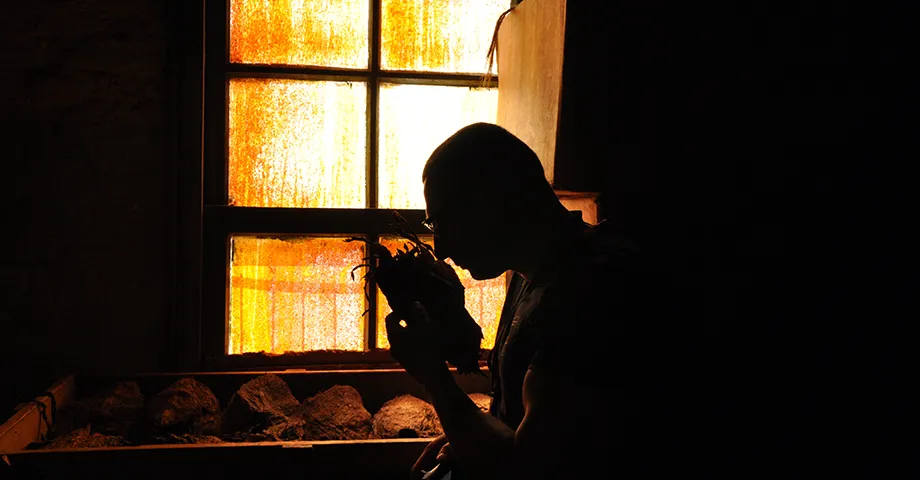
In an age dominated by industrial automation, the creation of an authentic Cuban Habano remains an uncompromising artisan craft unchanged for over two centuries.
Every premium Cuban cigar bearing the Totalmente a Mano designation is rolled entirely by hand by a master Torcedor (cigar roller) at historic Havana tabacaleras such as El Laguito, Partagás, La Corona, and H. Upmann.
Here is the step-by-step journey of how cured tobacco leaves are transformed into world-renowned Habanos.
Step 1: Conditioning and Destemming (El Despalillo)
Before rolling begins, aged wrapper leaves (Capas) are carefully removed from their bales and sprayed with a fine mist of purified water. Once supple, experienced workers (despalilladoras) strip the thick central vein from the leaf with a single swift motion, dividing each leaf into two usable halves sorted by size and color shade.
Step 2: Formulating the Bunch (La Liga y El Bonche)
The Torcedor receives a precise daily allocation of filler leaves (Volado, Seco, and Ligero) according to the factory’s Master Blend recipe.
- Accordion Technique: The Torcedor folds the long filler leaves like an accordion to ensure continuous airflow channels running down the full length of the cigar.
- Placing the Ligero: The strongest, slowest-burning Ligero leaf is placed in the exact center of the bunch, surrounded by aromatic Seco and combustible Volado.
- Applying the Binder: The bunch is rolled snugly into the elastic Capote (binder leaf).
Step 3: Wooden Mold Pressing (La Prensa)
The rolled bunches are placed into two-piece wooden molds (moldes) with shaped grooves. The molds are placed into a hand-cranked wooden press for 30 to 45 minutes, turned 90 degrees halfway through to eliminate seam lines and ensure a perfect cylindrical shape.
Step 4: Applying the Wrapper and the Triple Cap
- Cutting the Wrapper: The Torcedor smooths the delicate Capa leaf on the hardwood table (la tabla) and cuts a pristine, curved contour using the chaveta blade.
- Spiral Wrapping: The binder bunch is placed on the leaf and rolled under light tension from the foot up to the head.
- The Triple Cap: At the head, the Torcedor cuts a circular disc (el casquillo) and secures it with natural, odorless vegetable gum (goma de tragacanto), creating the iconic Cuban three-tiered triple cap.
Step 5: Quality Inspection and Color Sorting
Every completed batch undergoes rigorous quality control:
- Draw Testing: Cigars are tested in a suction airflow machine to guarantee zero plug or draw restriction.
- Escogida (Color Sorting): Master sorters arrange cigars across 60 distinct color gradations to ensure perfect uniformity within each box.
Experience the heritage of handmade Cuban cigars. Browse our authentic Partagás, Montecristo, and Romeo y Julieta vitolas at Ray’s Cigars.
Frequently asked questions
What tools does a Cuban cigar roller (Torcedor) use?
A Torcedor uses only traditional, non-mechanical tools: a flat wooden board (la tabla), a curved rolling knife (la chaveta), a circular cap cutter (el casquillo), a ring gauge template (el cepo), a small guillotine, and natural odorless vegetable gum (goma de tragacanto).
What does 'Totalmente a Mano' mean on a Cuban cigar box?
'Totalmente a Mano' means 'Totally by Hand'. It signifies that the entire cigar, from assembling the long filler bunch to applying the binder and wrapper, was crafted entirely by hand by a certified master Torcedor without any rolling machines.
What are the four categories of Cuban Torcedores?
Cuban cigar rollers are ranked from Category 1 (entry-level vitolas) to Category 4 (Master Torcedor). Only Category 4 rollers are entrusted with complex, large vitolas like Double Coronas, Lanceros, and Figurados.
Keep reading
The Best Cuban Cigars Worth Seeking Out in 2026: The Aficionado's List
From Cohiba Siglo VI to Partagás Lusitanias and Trinidad Fundadores: explore the top Cuban cigars every connoisseur must smoke at …
Read article →
H. Upmann Magnum 52: Year of the Tiger Cuban Collector's Vitola
Complete guide to the H. Upmann Magnum 52: Habanos S.A.'s luxury release commemorating the Chinese Lunar Year of the Tiger.
Read article →Cohiba 55th Anniversary: The Legacy of Habanos' Crown Jewel
Celebrating 55 years of Cohiba (1966–2021): explore the history of El Laguito, Fidel Castro's personal blend, and the exclusive Co…
Read article →