Cigar Sizes and Shapes Chart: Vitolas and Ring Gauge Guide
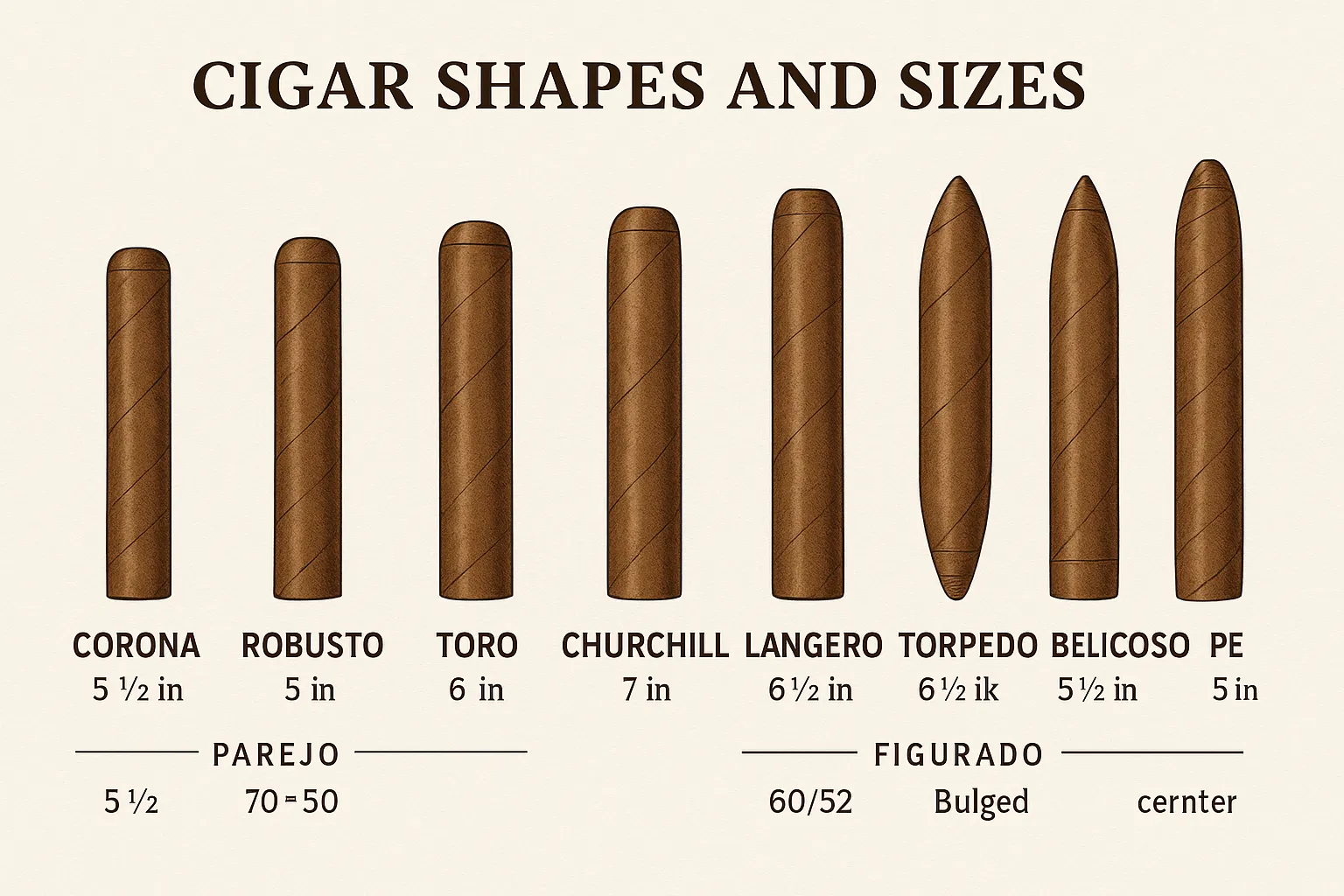
Every handmade cigar is defined by two measurements and a silhouette: its length (traditionally expressed in inches on New World boxes and millimetres on Cuban factories’ spec sheets), its thickness (expressed as a ring gauge), and whether its sides run straight or taper. Together, those dimensions are known as a cigar’s vitola.
Many buyers treat size as purely a question of how much time they have after dinner. Time matters, certainly, but size and shape also alter the combustion temperature, the draw resistance, and the ratio of wrapper leaf to filler core. Roll the exact same blend into a thin lancero, a blocky robusto and a tapered pyramid, and you will taste three noticeably different cigars.
How cigar measurements work: length and ring gauge
Length is straightforward: a five-inch cigar measures 127 millimetres from foot to cap. Ring gauge is an older unit of measure that divides a single inch into 64 equal increments.
Why does thickness change how a cigar tastes? Two physical principles are at work on every draw:
- The wrapper-to-filler ratio: As diameter increases, the cross-sectional area of the filler core grows with the square of the radius, while the circumference of the wrapper grows only linearly. In a 38-ring lancero, the wrapper and binder account for more than half of the smoke. In a 60-ring gordo, the roller can pack five or six full filler leaves from different primings and regions into the bunch, making the interior blend the dominant voice.
- Combustion temperature and airflow: A wider tunnel of tobacco carries a larger volume of cool air when you draw, keeping the coal cooler and producing dense, creamy smoke. A slender ring gauge concentrates heat into a narrow cylinder; draw too quickly on a thin vitola and the smoke turns hot and bitter.
Parejo vs Figurado: the two families of cigar shapes
Every vitola in our cigar shapes catalogue falls into one of two structural categories:
- Parejos are straight-sided cylindrical cigars with an open, flat foot for lighting and a rounded cap (
gorro) at the head that must be cut before smoking. Most Parejos are rolled in the round, though some lines are box-pressed (compressed into a squared-off profile in wooden trays after rolling, which often produces a slightly flatter draw and stops the cigar rolling off the edge of an ashtray). - Figurados are cigars with non-parallel sides: tapered heads, bulbous bellies, or closed, pointed feet. Because a Figurado cannot be bunched by machine or simple cylindrical moulds alone, it requires senior rollers (
torcedoresof the highest factory grades) and usually commands a slight premium.
Complete cigar sizes and smoking time chart
Dimensions vary by a few millimetres between New World manufacturers, while Habanos S.A. enforces strict factory specifications across all Cuban brands. The table below covers the standard benchmark dimensions and realistic smoking times when puffed once every 45 to 60 seconds.
| Vitola Name | Cuban Factory Name (Vitola de Galera) | Typical Length | Ring Gauge | Diameter (mm) | Family | Avg. Smoking Time |
|---|---|---|---|---|---|---|
| Demi Tasse / Entreacto | Entreactos | 4” (100 mm) | 30 | 11.9 mm | Parejo | 15–20 mins |
| Perla / Tres Petit Corona | Perlas | 4” (102 mm) | 40 | 15.9 mm | Parejo | 25–30 mins |
| Petit Corona | Marevas | 5 1/8” (129 mm) | 42 | 16.7 mm | Parejo | 35–45 mins |
| Corona | Coronas | 5 1/2” (142 mm) | 42 | 16.7 mm | Parejo | 45–55 mins |
| Robusto | Robustos | 4 7/8”–5” (124 mm) | 50 | 19.8 mm | Parejo | 45–60 mins |
| Corona Gorda | Coronas Gordas | 5 5/8” (143 mm) | 46 | 18.3 mm | Parejo | 55–65 mins |
| Toro | Cañonazo / Genios | 6” (152 mm) | 50–52 | 19.8–20.6 mm | Parejo | 60–75 mins |
| Lonsdale | Cervantes | 6 1/2” (165 mm) | 42 | 16.7 mm | Parejo | 60–75 mins |
| Lancero | Laguito No. 1 | 7 1/2” (192 mm) | 38 | 15.1 mm | Parejo | 70–85 mins |
| Churchill | Julieta No. 2 | 7” (178 mm) | 47 | 18.7 mm | Parejo | 75–95 mins |
| Double Corona | Prominentes | 7 5/8” (194 mm) | 49 | 19.4 mm | Parejo | 90–115 mins |
| Gordo / Grand Robusto | Sublimes / Magicos | 5”–6” (127–152 mm) | 56–60 | 22.2–23.8 mm | Parejo | 65–90 mins |
| Petit Belicoso / Campana | Campanas | 5 1/2” (140 mm) | 52 | 20.6 mm | Figurado | 50–65 mins |
| Pyramid / Pirámide | Pirámides | 6 1/8” (156 mm) | 52 | 20.6 mm | Figurado | 65–80 mins |
| Perfecto / Doble Figurado | Tacos / Distinguidos | 5”–6 3/8” (127–162 mm) | 46–52 | 18.3–20.6 mm | Figurado | 50–80 mins |
The classic Parejo formats in detail
Corona and Petit Corona
For most of the twentieth century, the Corona and Petit Corona (known in Cuban factories as the Mareva, measuring 129 mm by 42 ring gauge) were the default formats of the cigar world. At 42 ring gauge, they sit comfortably in the hand and put the wrapper leaf front and centre. Because the cylinder is relatively narrow, a Petit Corona delivers full flavour immediately upon lighting without the fifteen-minute warm-up period common to thicker formats. If you are looking for shorter formats for a half-hour break, see our dedicated guide to the best short cigars and cigarillos.
Robusto
Measuring roughly 4 7/8 to 5 inches by 50 ring gauge, the Robusto overtook the Corona in the 1990s to become the world’s single best-selling format. A 50 ring gauge is wide enough to burn cool and forgive an occasional impatient puff, while the five-inch length keeps the smoking time to a reliable 45 to 60 minutes. Benchmark examples include the Cohiba Robustos and Partagás Serie D No. 4.
Toro
Add an inch of length (and often two ring-gauge points) to a Robusto and you have the Toro, typically 6 inches by 50 to 52 ring gauge. That extra inch does more than add twenty minutes of burn time: it gives the first two thirds of the cigar a cooler, more gradual filter, allowing complex Nicaraguan and Dominican blends to transition smoothly from cedar and cream into leather and espresso. We compare how these two heavyweights smoke head-to-head in our Toro vs Robusto guide.
Corona Gorda
At 5 5/8 inches by 46 ring gauge, the Corona Gorda is often called the connoisseur’s compromise. It splits the difference between the wrapper-forward intensity of a 42-ring Corona and the cool draw of a 50-ring Robusto. In Cuban portfolios, some of the most respected regular-production cigars, including the Punch Punch and Hoyo de Monterrey Epicure No. 1, are rolled in this exact factory mould.
Lancero and Panatela
Created at El Laguito in Havana as the Laguito No. 1 (7 1/2 inches by 38 ring gauge, often topped with a twisted pigtail cap), the Lancero is the ultimate test of both wrapper quality and rolling skill. With room for only a slender bunch of filler leaves inside the binder, over half of what you taste is the wrapper and binder combined. Lanceros must be sipped gently; puff hard and the narrow coal overheats, but pace yourself and no other format delivers as much aromatic clarity. Its shorter, slightly slimmer sibling is the Panatela.
Churchill and Double Corona
Named after Sir Winston Churchill’s fondness for the 7-inch by 47-ring Julieta No. 2 vitola, the Churchill is built for unhurried evenings when you have a full ninety minutes to spare. Step up slightly more in length and girth (7 5/8 inches by 49 ring gauge, the Cuban Prominentes in our long cigars collection) and you reach the Double Corona, immortalised by the Partagás Lusitanias. Because the smoke travels through nearly eight inches of unburned tobacco during the first half hour, a Double Corona starts remarkably silky and builds gradually to a rich, resonant final third.
Gordo
Any straight-sided cigar of 56 ring gauge or wider falls into the Gordo category (often sold as a 6x60). Gordos burn exceptionally cool and produce clouds of thick smoke, though smokers with smaller cutters should keep a punch cutter or a wide-aperture guillotine on hand.
The Figurado shapes in detail
Why a tapered head changes the palate
On a straight Parejo, a guillotine cut opens the entire diameter of the head, spreading smoke broadly across the tongue. On a tapered Belicoso, Torpedo or Pyramid, you clip a narrow opening near the tip, which channels the smoke in a concentrated stream and allows you to open the draw further with a second cut if it feels firm.
Belicoso and Torpedo
A Belicoso (such as the Cuban Campanas mould at 5 1/2 inches by 52 ring gauge) features straight sides that round smoothly into a short, conical head, whereas a Torpedo terminates in a longer, sharper point. Both give you complete control over the aperture when you cut and light your cigar: always make your first cut conservatively (just 3 millimetres down the cone), test the cold draw, and take a second slice only if you want more airflow.
Pyramid (Pirámide)
Unlike a Torpedo, whose body stays parallel until the shoulder tapers at the head, a true Pyramid (and the classic Cuban Pirámides at 6 1/8 inches by 52 ring gauge, like the Montecristo No. 2) tapers gradually toward the head. As the coal burns from the wide 52-ring foot toward the narrower upper third, the ratio of wrapper to filler shifts subtly as you smoke.
Perfecto and Double Figurado
Tapered at both the head and the foot, with a rounded bulge in the middle, the Perfecto was the dominant luxury shape of the late nineteenth and early twentieth centuries. In Cuba today, the entire Cuaba marca is rolled exclusively in Double Figurado shapes, led by the impressive Cuaba Distinguidos. In the Dominican Republic, the Hemingway and Winston Churchill lines carry the tradition forward; see our feature on the first Perfecto for Davidoff’s Winston Churchill brand.
Lighting a Perfecto takes patience: toast only the narrow nipple at the foot, take slow puffs while the ember climbs up into the widest part of the belly, and let the burn line self-correct as it reaches full diameter.
Salomón and Culebra
At the pinnacle of the Figurado family sits the stately Salomón (7 1/4 inches by 57 ring gauge, tapered at both ends with a sculpted nipple foot) and the historic Culebra (“snake” in Spanish): three slender panatelas braided together while still damp from the rolling table and tied with ribbon. Contrary to myth, you do not smoke all three Culebras at once; you untie the braid and share the three curiously curved cigars with two companions.
Cuban factory names vs commercial names
If you collect Cuban cigars, you will frequently encounter two different names for the exact same size:
- Vitola de Salida (commercial or market name): What the brand prints on the dress box, such as Montecristo Edmundo, Cohiba Siglo VI, or Partagás Serie P No. 2.
- Vitola de Galera (factory name): The internal Habanos factory specification shared across brands. For example, the Montecristo No. 4, Cohiba Siglo II, Por Larrañaga Petit Coronas and Romeo y Julieta Cedros de Luxe No. 3 are all rolled in the exact same Marevas mould (129 mm by 42 ring gauge).
Knowing the vitola de galera lets you cross-shop across Cuban brands with total confidence in how the cigar will feel in the hand and how long it will burn. We cover how factory moulds relate to box stamps in our guide to reading Cuban cigar box codes and ageing Habanos.
Choosing the right size for the occasion
- 20 to 35 minutes (coffee break or winter terrace): Pick a Perla, Half Corona or Petit Corona from our short cigars selection. Avoid cutting a larger cigar in half; the wrapper will unravel because only the head carries pectin adhesive and a cap.
- 45 to 60 minutes (after lunch or a single dram): A Robusto or Corona Gorda gives you full blend complexity without demanding your entire evening.
- 75 to 110 minutes (long dinner, summer garden, or celebration): Reach for a Churchill, a Double Corona from our long cigars range or a Pyramid. Never rush a long format; if you only have forty minutes, a Petit Corona smoked slowly will always taste better than a Churchill smoked in a hurry and abandoned halfway through.
Explore our complete catalog filtered by dimensions in the cigar sizes directory or browse every silhouette in the cigar shapes directory.
Frequently asked questions
What does ring gauge mean on a cigar?
Ring gauge is the diameter of a cigar measured in 64ths of an inch. A 50-ring-gauge cigar is 50/64ths of an inch thick, or roughly 19.8 millimetres. A 64-ring-gauge cigar is exactly one full inch (25.4 millimetres) in diameter.
Does a bigger cigar taste stronger than a smaller cigar?
Usually the opposite is true. Thicker cigars burn cooler because a larger cylinder of tobacco draws more air and retains less heat per puff, producing smoother, creamier smoke. Thinner formats like lanceros and petit coronas concentrate heat and have a higher proportion of wrapper leaf, which often makes them taste more intense.
What is the difference between a Parejo and a Figurado?
A Parejo is a straight-sided cylinder with an open foot and a rounded head, such as a Robusto, Corona or Churchill. A Figurado is any cigar with tapered, pointed or bulging sides, including Torpedos, Belicosos, Pyramids, Perfectos and Culebras.
What is the difference between vitola de galera and vitola de salida?
In Cuban cigar factories, the vitola de galera is the official factory mould name that defines exact dimensions, such as Julieta No. 2 or Mareva. The vitola de salida is the commercial name printed on the box, such as Churchill or Petit Corona.
How long does it take to smoke a Robusto vs a Churchill?
A standard Robusto (roughly 5 inches by 50 ring gauge) burns for 45 to 60 minutes at an unhurried pace. A full Churchill (7 inches by 47 ring gauge) or Double Corona takes between 75 and 110 minutes.
Keep reading
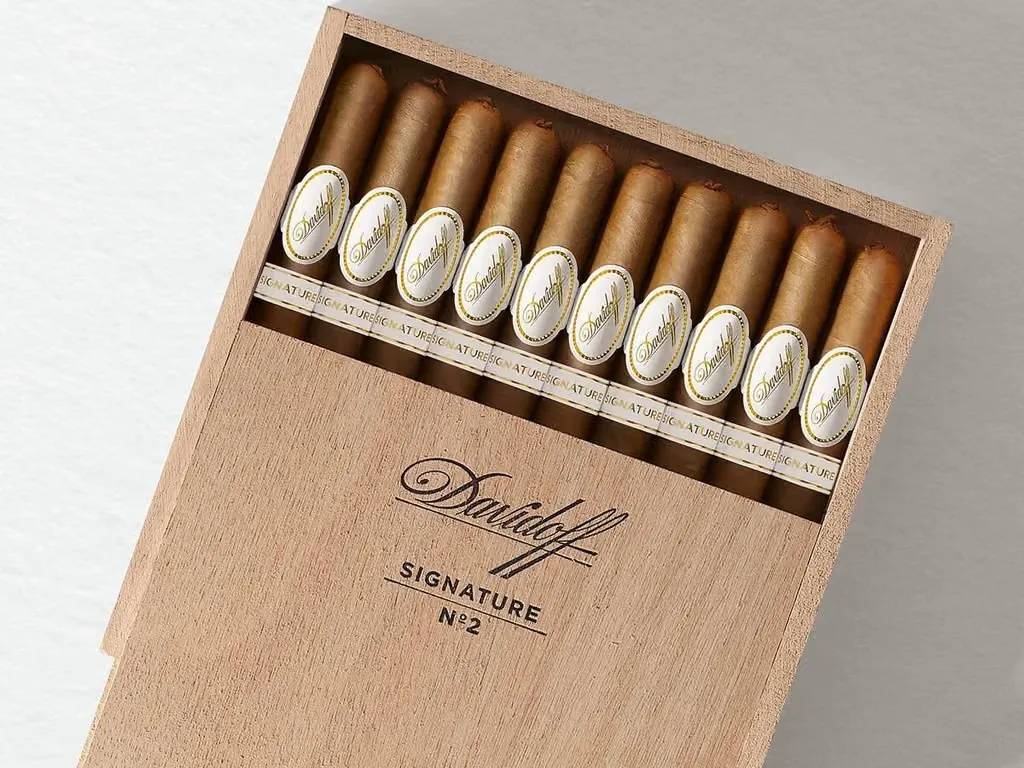
Cigar Wrappers Explained: Connecticut, Habano and Maduro
Compare Connecticut, Habano, Corojo, Cameroon and Maduro cigar wrappers: how shade, sun and fermentation shape colour, sweetness a…
Read article →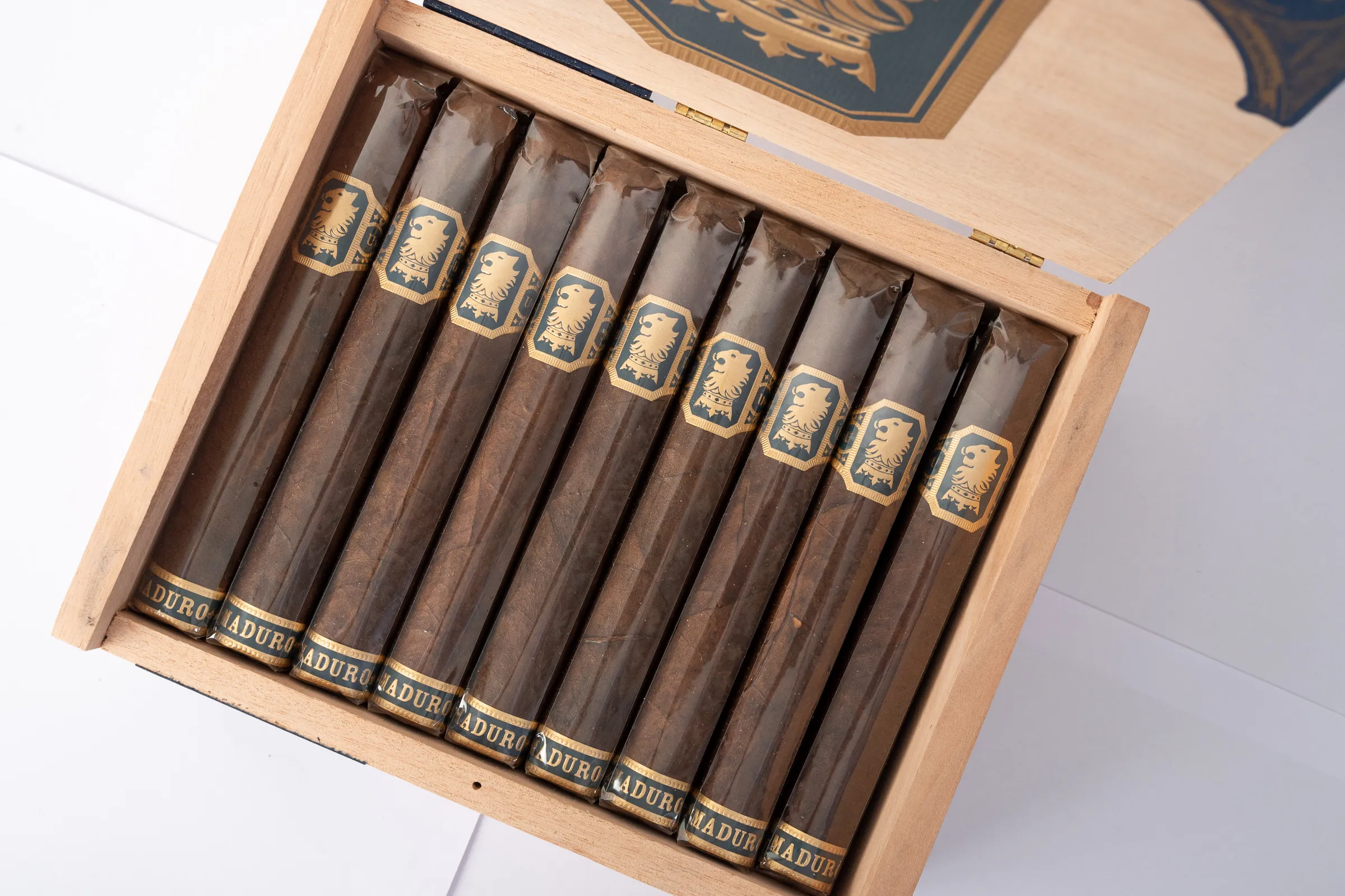
Cuban vs New World Cigars: Nicaraguan and Dominican Guide
Compare Cuban, Nicaraguan and Dominican cigars: how Vuelta Abajo, Esteli and Cibao Valley terroir, puro vs multi-origin blending, …
Read article →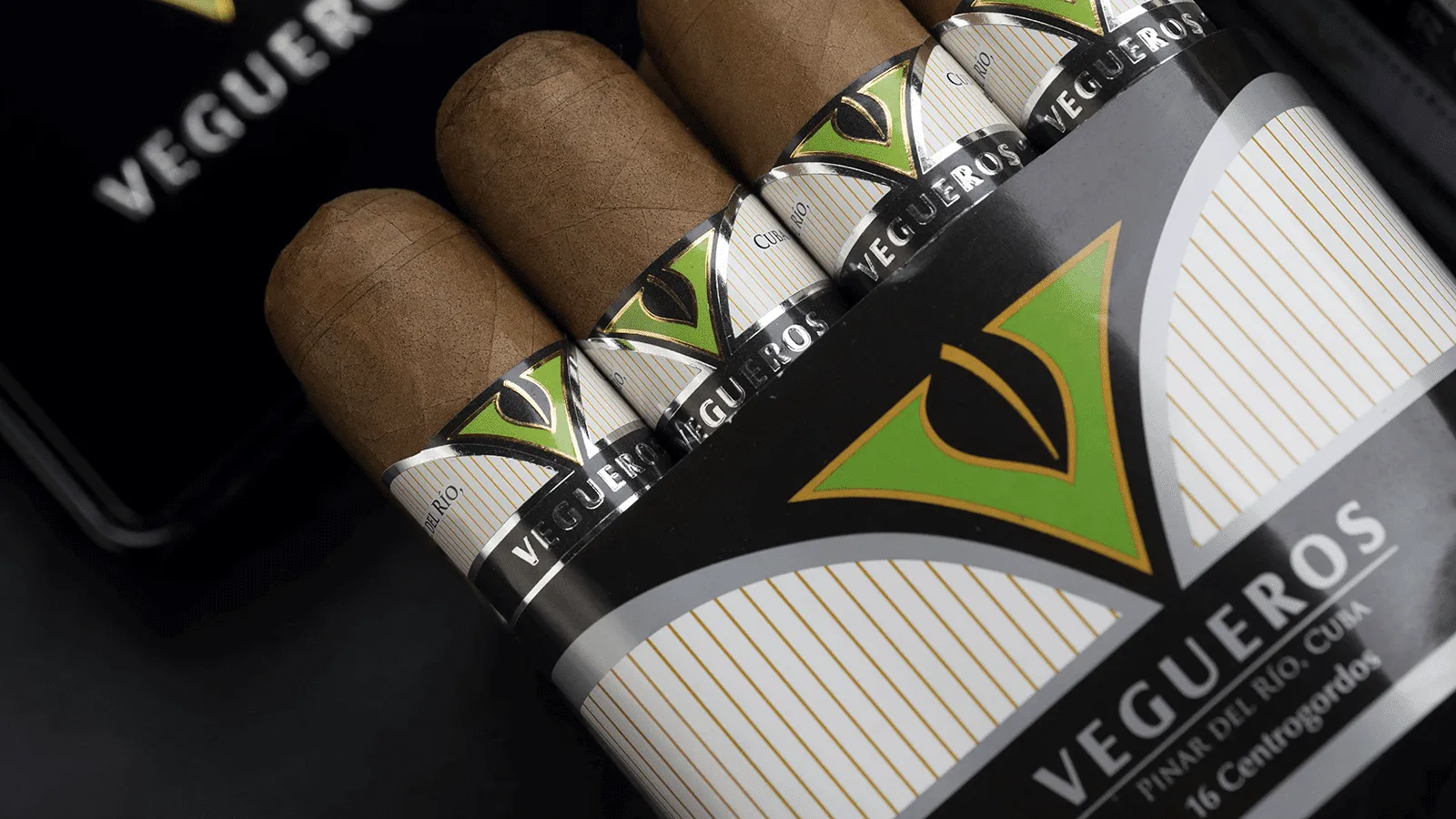
Best Short Cigars and Cigarillos for a 20–35 Minute Smoke
Discover the best short cigars, Half Coronas, Petit Robustos and Cuban cigarillos (Mini, Club and Puritos) for a rich 15-to-35-min…
Read article →
Cigar Strength Explained: Mild, Medium and Full
What cigar strength actually measures, why it is not the same as flavour intensity, which leaves in the blend produce it, and how …
Read article →