Cigar Wrappers Explained: Connecticut, Habano and Maduro
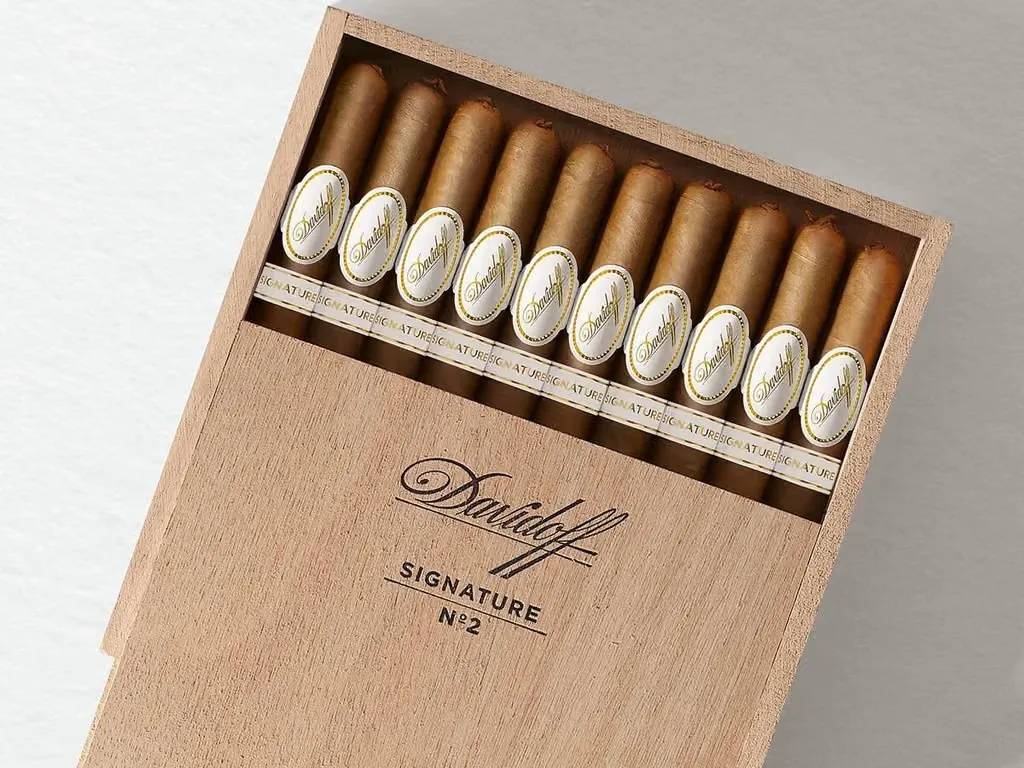
Walk into any walk-in humidor and the first thing your eye registers is colour: pale straw-gold at one end of the shelf, warm chestnut and reddish clay in the middle, and dark espresso brown at the other. Most smokers start out assuming that colour scale is a strength scale. It is not.
The wrapper leaf (capa in Spanish) is the most expensive single component of a handmade cigar, graded for elasticity, oil, vein structure and uniform colour before a roller ever touches it. Yet what that leaf contributes in the glass and on the palate has far more to do with how the plant was shielded from the sun and how long the cured leaf sat in a fermentation pile than with how much nicotine the cigar carries.
Once you understand how the main wrapper families behave, choosing a box stops being guesswork.
What the wrapper actually does
A long-filler cigar is built from three components: the filler core (tripa), the binder (capote) that holds the bunch together, and the outer wrapper (capa). We break down how all three parts interact in our guide to the five leaves that make up a cigar.
Mechanically, the wrapper gives the cigar its clean finish and keeps the burn line tidy. Sensorially, it sits on the outside of the cylinder where oxygen supply is highest and combustion temperature is slightly cooler than at the centre of the coal. That means the volatile oils in the wrapper distil cleanly into the smoke stream rather than burning off completely, and the wrapper is also the only leaf that touches your lips directly.
Ring gauge changes the wrapper-to-filler ratio dramatically. Take the same blend and roll it as a 38-ring lancero and a 58-ring gordo: the lancero will taste predominantly of the wrapper leaf, while the gordo will foreground the binder and filler. When you want to taste what a wrapper is actually doing, pick a corona, lonsdale or robusto rather than an oversized format.
Shade-grown vs sun-grown leaf
Before looking at seed varieties and fermentation styles, every wrapper starts with a farming decision: shade or open sun.
- Shade-grown (
tapado): Muslin or cheesecloth tents are stretched over the field, filtering roughly a third of the direct sunlight and raising ambient humidity around the plants. Because the leaf does not need to defend itself from intense UV radiation, it grows larger, thinner and finer-veined, with less sugar and fewer heavy oils. - Sun-grown (
sol): Left open to the tropical sky, the plant develops a thicker cuticle, heavier veining and a higher concentration of oils and sugars to protect itself from heat. When fermented, those extra sugars and oils become the foundation for richer, earthier and sweeter wrapper styles, including Maduro.
The major cigar wrapper types compared
Although hundreds of hybrid seeds exist today, almost every premium cigar you encounter uses one of seven foundational wrapper styles.
| Wrapper Type | Typical Shade | Growth & Origin | Core Flavour Notes | Typical Pairing |
|---|---|---|---|---|
| Connecticut Shade | Blonde / Claro | Shade-grown (USA or Ecuador) | Cream, white pepper, cedar, toasted almond | Espresso with milk, Champagne |
| Natural / Claro | Light tan | Shade or cloud-filtered sun | Hay, dry wood, brioche, soft floral | Filter coffee, Speyside single malt |
| Cameroon | Reddish-brown | Shade/partial sun (Cameroon, Central Africa) | Baking spice, dry cedar, subtle tangy sweetness | Aged rum, dry Oloroso sherry |
| Habano | Colorado / rich brown | Sun or shade (Cuba, Nicaragua, Ecuador) | Espresso, leather, black pepper, warm earth | Single malt whisky, black coffee |
| Corojo | Reddish-chestnut | Cuban heritage seed (Honduras, Nicaragua) | Red pepper, roasted nuts, cedar, lively spice | Bourbon, rye whiskey |
| Maduro (Broadleaf / San Andrés) | Dark chocolate | Sun-grown, high-heat fermentation | Dark cocoa, molasses, espresso, dried fig | Tawny Port, Pedro Ximénez, dark rum |
| Oscuro | Jet black | Late-harvest sun-grown, longest fermentation | Bitter chocolate, charred oak, black liquorice | Islay whisky, neat cognac |
1. Connecticut Shade
Originally cultivated in the Connecticut River Valley of New England and now also grown at altitude in Ecuador under natural cloud cover, Connecticut wrapper leaf is the benchmark for pale, silky presentation.
Traditional US Connecticut Shade is elastic, golden-blonde and subtly grassy, with a creamy texture and a dry cedar finish. Ecuadorian Connecticut, grown under constant volcanic cloud cover at the foot of the Andes, is slightly thinner still and tends to let the underlying binder and filler speak more clearly.
For decades Connecticut Shade was paired almost exclusively with mild Dominican fillers, such as in the classic Davidoff Grand Cru No. 2. Modern blenders also wrap Connecticut Shade around medium-bodied Nicaraguan cores to create contrast: buttered toast and cream on the aroma, backed by white pepper and roasted coffee from the filler.
2. Natural and Claro wrappers
In catalogue terminology, Natural wrappers cover light-to-medium tan leaves cured to preserve their natural blonde-brown hue without extended high-heat fermentation. They sit between the delicacy of Connecticut Shade and the deeper spice of a sun-grown Habano. Expect clean cedar, hay, roasted cashews and a clean, dry finish on the palate.
3. Habano and Sun-Grown
When a wrapper is labelled simply “Habano”, it refers to leaf grown from Cuban-seed stock. On the island of Cuba itself, all Cuban cigars use locally grown Habano leaf, primarily from the Vuelta Abajo district of Pinar del Río, where top-grade wrapper is grown under cloth (tapado) to keep the texture supple while retaining unmistakable Cuban earth, leather and floral complexity.
Outside Cuba, Ecuador and Nicaragua produce the most sought-after Habano wrappers:
- Ecuadorian Habano is prized for its reddish-mahogany colour (
colorado), high oil content and balance of leather, roasted coffee and savoury spice. A benchmark example is the sun-grown Habano wrapper on the Oliva Serie V Doble Robusto. - Nicaraguan Habano grown in Jalapa or Estelí is thicker, oilier and punchier, bringing dark roast coffee, cocoa nibs and black pepper right from the cold draw.
4. Corojo
Corojo wrappers take their name from Santa Inés del Corojo, the famous vega in San Luis, Cuba, that supplied the wrapper leaf for classic Habanos throughout the mid-twentieth century. Because original Corojo is highly susceptible to blue mould and black shank fungus, Cuba bred resistant hybrids in the 1990s, while growers in Honduras (particularly the Jamastran Valley) and Nicaragua preserved and refined Corojo 99 and Original Corojo strains.
You can spot a good Corojo wrapper by its warm, reddish-chestnut sheen (colorado-claro to colorado). On the palate it delivers a distinctive zing of red and black pepper on the retrohale, followed by cedar, leather and a sweet, nutty core.
5. Cameroon
Grown in Central Africa from Sumatra seed stock introduced in the early twentieth century, genuine Cameroon leaf is small, toothy and notoriously fragile on the rolling table. Those tiny bumps on the surface of the leaf, known as “tooth”, are microscopic pockets of concentrated essential oil. When the coal burns through them, they release a fragrant, unmistakably spicy aroma of nutmeg, cedar bark and faint brown sugar. Because the leaf is thin, Cameroon wrappers burn with a crisp, razor-straight ash.
6. Maduro: what the process actually is
“Maduro” is not a seed variety. It is the Spanish word for “ripe” or “mature”, and in cigar making it describes both the ripeness of the harvested leaf and a rigorous, high-temperature fermentation process.
Why only certain leaves can become Maduro
You cannot turn a thin, shade-grown Connecticut leaf into a Maduro. Under the heat and moisture of a Maduro fermentation pile, a delicate leaf simply rots and falls apart. True Maduro requires a thick, oily, sun-grown leaf from the upper priming of the plant that can survive months of fermentation at temperatures reaching 40 to 45 Celsius without losing its tensile strength.
During this extended fermentation in large cedar-lined piles (pilones), natural enzymes and heat break down complex starches in the leaf into simple sugars while oxidising the chlorophyll and tannins into deep espresso-brown pigments. That is why a true Maduro wrapper tastes of dark chocolate, molasses, stewed plum and espresso, with far less astringency than a younger leaf.
Three distinct wrapper tobaccos dominate the Maduro category:
- Cuban Maduro (Habanos Maduro 5 and Behike/Reserva lines): Cuba selects the thickest, top-priming shade-grown leaves (
coronaandcentro gordo), ages them for up to five years and gives them a secondary fermentation. The Cohiba Maduro 5 Genios is the textbook example: velvety, medium-to-full in body, with dark cocoa, roasted cedar and zero harshness. - Mexican San Andrés (
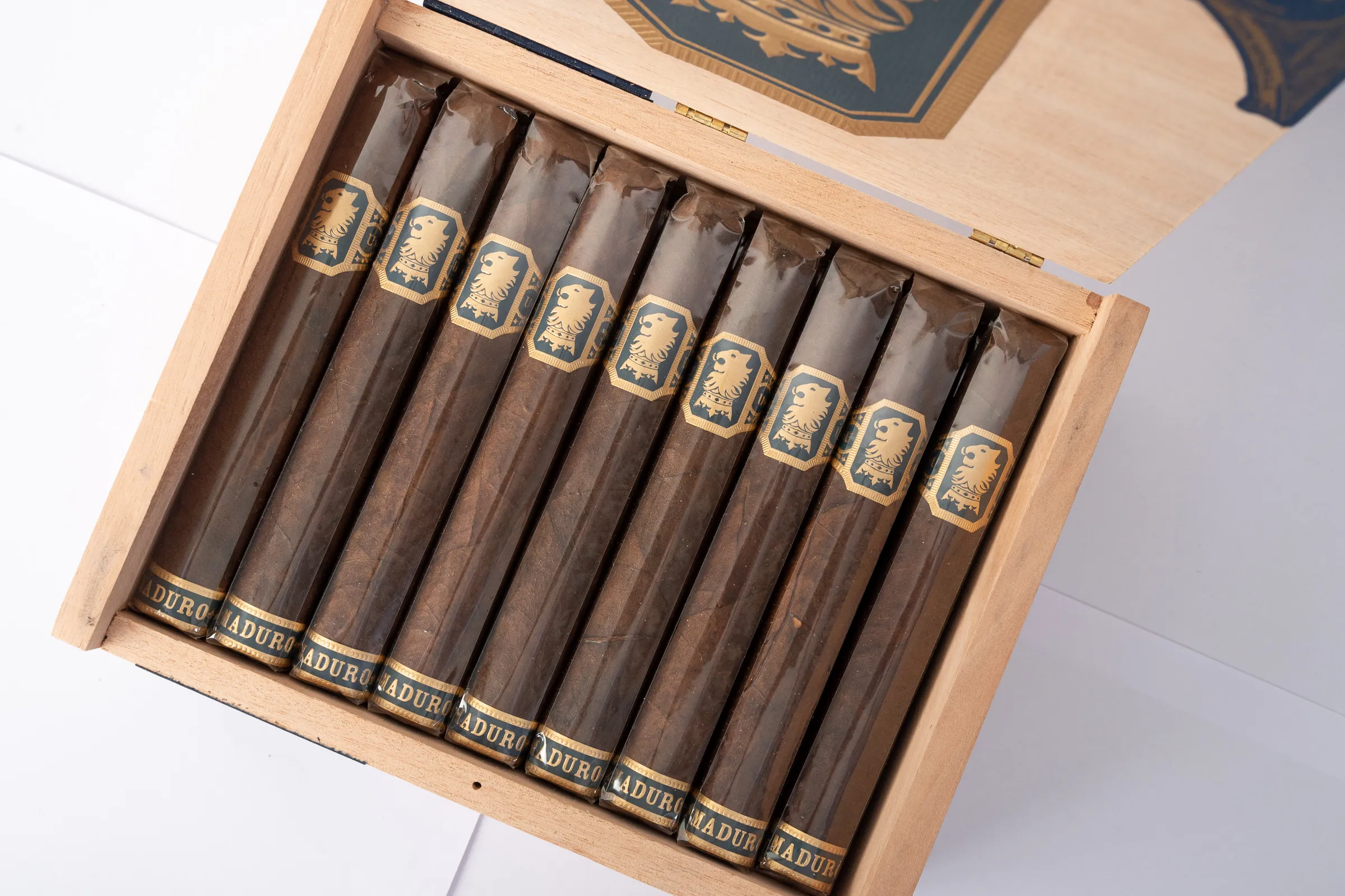
Negro San Andrés): Grown in the volcanic soil of the San Andrés Tuxtla valley in Veracruz, Mexico, this native sun-grown leaf is stalk-cut and naturally dark. It brings an unmistakable balance of dark chocolate, damp earth and a faint mineral salinity, showcased brilliantly on the Drew Estate Undercrown Gran Toro Maduro. - Connecticut Broadleaf and Brazilian Mata Fina / Arapiraca: US Broadleaf is thick, rugged and heavily veined, delivering syrupy molasses and black cherry notes. Brazilian Maduro tobaccos, such as the wrapper on the AJ Fernandez Bellas Artes Brazil Maduro Robusto, offer a slightly drier, floral dark-cocoa profile with a peppery finish. For a look at how prolonged 16-month fermentation transforms a Dominican-blended luxury cigar, read our profile of the Davidoff Maduro series.
7. Oscuro
One step darker than Maduro is Oscuro (sometimes called Double Maduro or Negra). Leaves destined for Oscuro are left on the stalk until the very end of the harvest to soak up maximum sunlight, then fermented the longest. The surface is jet-black and often coarse, with intense notes of 85-percent dark chocolate, black pepper and charred oak.
The colour-to-strength myth
If you take one rule away from comparing wrappers, let it be this: wrapper shade tells you flavour direction, while filler composition tells you nicotine strength. We cover how priming levels govern nicotine in our dedicated guide to cigar strength explained.
A pale Ecuadorian Connecticut wrapper rolled over double-ligero Nicaraguan filler will put a careless smoker back in their chair. Conversely, a jet-dark Maduro wrapper rolled over mild Dominican seco and volado filler will smoke gently for an hour with notes of cocoa and raisin.
Storage and burn considerations by wrapper type
Because wrapper leaves differ in thickness and oil content, they respond differently inside your humidor:
- Connecticut Shade and Cameroon leaves are thin and low in heavy oils. If your humidor drops below 63 percent relative humidity, they lose elasticity quickly and can split when you cut the cap. Handle them gently and use a sharp double-guillotine cutter.
- Maduro and Broadleaf wrappers are thick and oil-rich. Because those oils slow down combustion, a Maduro stored at 72 percent relative humidity will often burn unevenly or require frequent touch-ups, as the filler core burns faster than the damp outer leaf (a problem known as tunneling). Storing thick Maduros at 65 to 68 percent relative humidity, as outlined in our humidor and humidity guide, lets the wrapper combust at the same pace as the bunch.
How to explore wrapper styles systematically
The fastest way to train your palate is to keep origin or ring gauge constant while changing the wrapper:
- Start with shade-grown clarity: Smoke a classic Connecticut Shade or light Claro, such as the Davidoff Grand Cru No. 2, paying attention to the creamy mouthfeel and dry cedar aroma on the retrohale.
- Step into sun-grown spice: Move to a sun-grown Ecuadorian Habano or Cuban
coloradowrapper, such as the Oliva Serie V Doble Robusto, and notice how the sweetness turns savoury and the pepper sharpens. - Finish with fermented Maduro richness: Compare a Cuban Cohiba Maduro 5 Genios against a Mexican San Andrés Undercrown Gran Toro Maduro to taste the difference between five-year aged Habanos fermentation and volcanic stalk-cut broadleaf.
You can browse our full selection filtered by leaf in the cigar wrapper catalogue, or pair your chosen wrapper with the right pour using our cigar and drink pairing guide.
Frequently asked questions
Does a dark Maduro wrapper mean a cigar is strong?
No. Wrapper colour comes from leaf variety, sunlight and extended fermentation rather than nicotine content. Nicotine strength comes chiefly from ligero filler leaves grown at the top of the plant. Many Maduro cigars are medium-bodied and noticeably sweeter than paler, sun-grown Habano or Corojo blends.
What is the difference between Connecticut Shade and Connecticut Broadleaf?
Connecticut Shade is grown under cheesecloth tents that filter direct sunlight, producing a thin, golden leaf with cream, cedar and almond notes. Connecticut Broadleaf is grown in open sun on a short, wide-leaved plant and fermented heavily at high temperatures to become a thick, dark, naturally sweet Maduro wrapper.
How much of a cigar's flavour comes from the wrapper?
Between 30 and 60 percent of the perceived aroma and flavour, depending on the ring gauge. In a thin vitola like a lancero or petit corona, the wrapper makes up a much higher proportion of the burning tobacco than in a 60-ring-gauge gordo, where the filler dominates.
Are Maduro wrappers dyed or artificially sweetened?
On a true handmade long-filler cigar, never. The deep brown or near-black colour of a real Maduro wrapper is the result of thick, sun-grown leaves fermenting in pilones at higher temperatures for months or years, which breaks down starches into natural sugars and darkens the leaf naturally.
Which cigar wrapper is best for beginners?
Connecticut Shade and natural Cameroon wrappers are the easiest starting points because they deliver clean cedar, cream and toasted nut flavours without heavy pepper. A mild-to-medium Maduro is also an excellent early choice if you prefer cocoa and dried-fruit sweetness over dry woodiness.
Keep reading
Cuban vs New World Cigars: Nicaraguan and Dominican Guide
Compare Cuban, Nicaraguan and Dominican cigars: how Vuelta Abajo, Esteli and Cibao Valley terroir, puro vs multi-origin blending, …
Read article →
Best Cigars for Beginners: What Is a Good First Cigar to Try?
New to cigars? Discover the best mild to medium Cuban and New World cigars for beginners, ring gauge sizing tips, cutting and ligh…
Read article →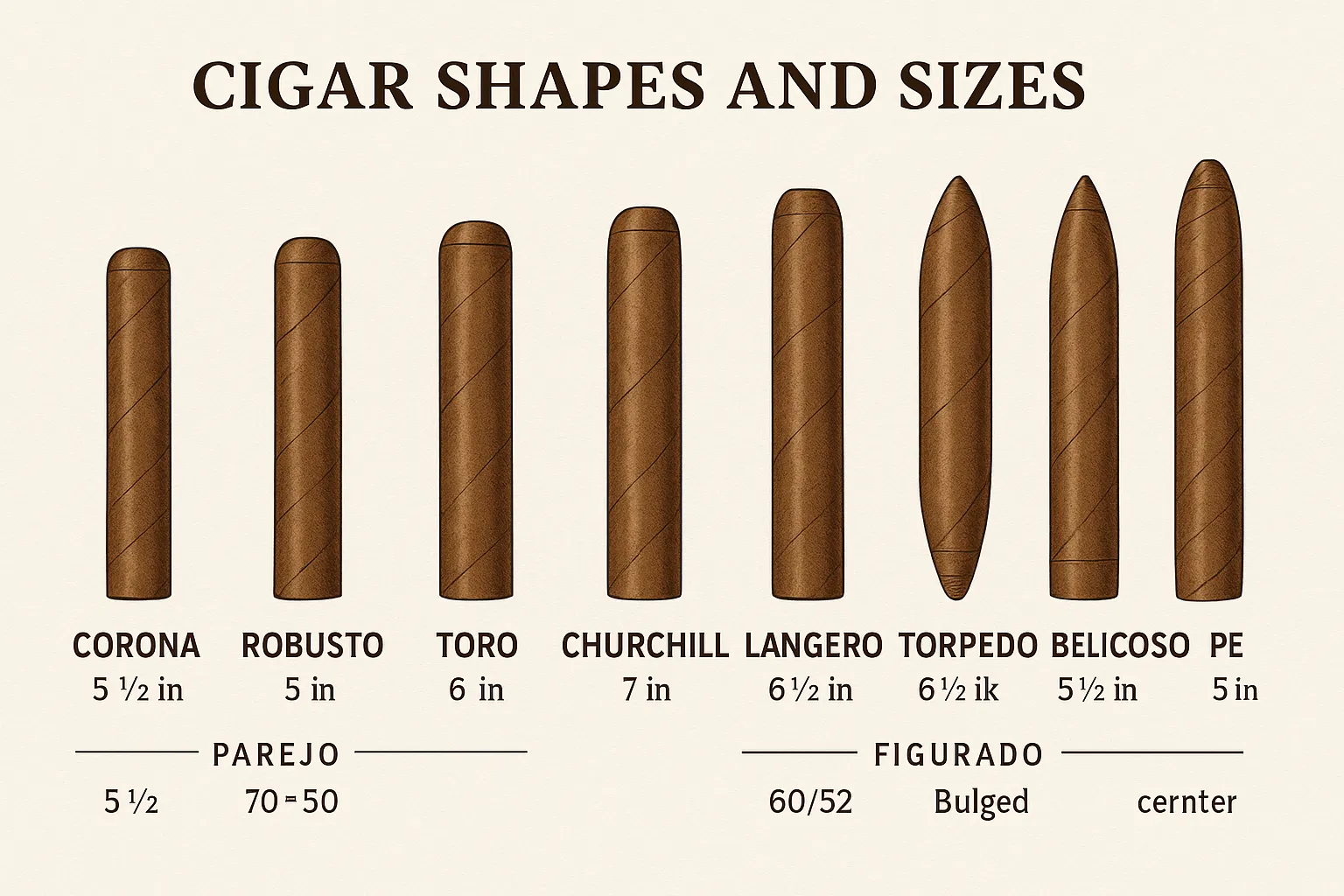
Cigar Sizes and Shapes Chart: Vitolas and Ring Gauge Guide
Complete cigar sizes and shapes chart explaining ring gauge, Parejo vs Figurado vitolas, and how Robusto, Toro, Corona, Churchill …
Read article → Davidoff Maduro: A Masterclass in Ecuadorian Sun-Grown Fermentation
Explore the rebirth of Davidoff Maduro: crafted with dark Ecuadorian corte #7 sun-grown wrappers, aged Mexican and Dominican fille…
Read article →