Cuban Cigar Box Codes, Factory Stamps and Ageing Guide
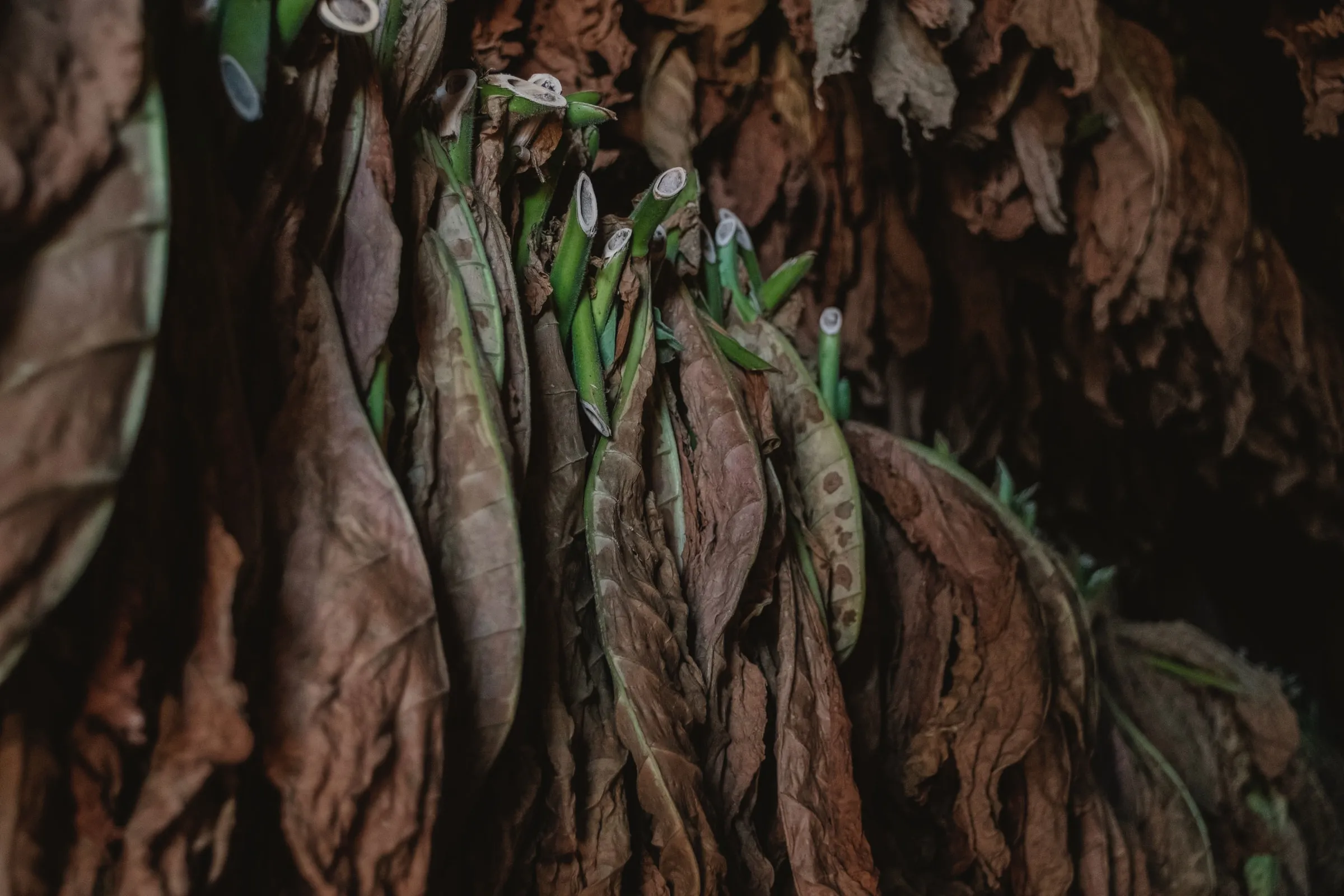
Turn over any sealed dress box or slide-lid cabinet of authentic Cuban cigars and you will see two things impressed into the cedar or cardboard base: the branded Habanos, Denominación de Origen Protegida hot-stamp, and a small black or purple ink stamp reading something like MAR OCT 23 or GES ABR 24.
To a casual buyer, that ink stamp looks like an internal warehouse batch number. To a collector, it is the single most useful piece of information on the box. It tells you the exact month and year the cigars were packed, which provincial or Havana factory rolled them, whether the cigars are currently passing through their post-roll fermentation phase, and how many years of humidor rest will bring them to their peak.
Anatomy of the Habanos box stamp
Every modern Habanos box code (used continuously since 2000) consists of three elements printed in a single line or a two-line block:
- The Factory Code (three letters, such as
MAR,Upmann’s current code, or a provincial code): Identifies the specific factory (fábrica) where the cigars were rolled and boxed. - The Month Code (three letters in Spanish): Identifies the month the finished cigars were inspected and packed into the box.
- The Year Code (two digits): Identifies the calendar year of boxing (
22for 2022,24for 2024, and so on).
The 12 Spanish month codes on Cuban cigar boxes
Because the months are abbreviated in Spanish, four of them differ noticeably from English abbreviations (January, April, August and December). Keep this reference table handy when inspecting a box:
| Stamp | Spanish Month | English Month | Stamp | Spanish Month | English Month |
|---|---|---|---|---|---|
| ENE | Enero | January | JUL | Julio | July |
| FEB | Febrero | February | AGO | Agosto | August |
| MAR | Marzo | March | SEP | Septiembre | September |
| ABR | Abril | April | OCT | Octubre | October |
| MAY | Mayo | May | NOV | Noviembre | November |
| JUN | Junio | June | DIC | Diciembre | December |
Notice that MAR can appear twice in a stamp: MAR MAR 24 means a box rolled at the El Laguito factory (MAR) in the month of March (Marzo, MAR) 2024.
Why Cuban factory codes rotate (and why collectors still track them)
Prior to 1999, Cuban factories used fixed, transparent acronyms (JM for José Martí / H. Upmann, FPG for Francisco Pérez Germán / Partagás, EL for El Laguito). Once international collectors realised which mother factories had the strictest quality control, buyers began refusing boxes from smaller provincial factories and paying premiums solely for specific stamps.
In response, Habanos S.A. introduced encrypted codes that scramble every few years. Moreover, under the Cuban casa matriz (mother factory) system, a single vitola such as the Montecristo No. 2 or Cohiba Robustos is not rolled solely inside one building; master blenders distribute the exact same Vuelta Abajo leaf recipe across several authorised factories to meet global demand.
Even so, enthusiasts pool verification data after every code change to identify the flagship Havana factories:
- El Laguito (
MARin recent years, previouslyUAO,AMO,MUO,BTO): The historic mansion in the Cubanacán district of Havana built for Cohiba. Because El Laguito retains the most experienced Level 9 (Noveno Grado) rollers and strictest draw-testing standards on the island, any box carrying the El Laguito stamp is prized by collectors, whether it holds Cohiba, Trinidad or an occasional run of Montecristo or Partagás. - La Corona (
RAT/TUA/bleera codes): The modern flagship factory responsible for Hoyo de Monterrey, Cuaba, Por Larrañaga and many Regional and Limited Editions. - H. Upmann and Partagás mother factories: Historic Havana operations that anchor full-bodied pyramid and double-corona production.
An authentic box code is one of several physical checkpoints when verifying a box; for a complete walkthrough of holograms, UV serial codes and band typography, read our guide to spotting real vs fake Cohiba cigars.
How Cuban cigar ageing works: the 4 stages of a Habano
Unlike most New World cigars, whose bales are aged for four to six years prior to rolling (as we explain in our Cuban vs New World cigars comparison), regular-production Habanos are frequently rolled and boxed while the tobacco is still biologically active. When you buy a box of Habanos regular production, the date stamp tells you which of four stages those cigars are currently in.
Understanding the “sick period”
When a torcedor rolls a cigar, the wrapper and binder are moistened with water so they stretch cleanly. Once sealed inside a cedar box, that trapped moisture triggers a slow, secondary microbial fermentation. Between roughly month 3 and month 12 after boxing, the leaves give off trace amounts of ammonia gas. A cigar smoked during this “sick period” often tastes muted, tannic or faintly bitter. It is not a flaw in the blend; the box simply needs time in the humidor for the ammonia to off-gas through the cedar.
Stage 1: Fresh off the rolling table (0 to 3 months from box date)
Right after rolling and before the secondary box fermentation kicks into high gear, a fresh Habano can be surprisingly vibrant, grassy and sweet. If you acquire a box stamped within the last ninety days, smoking one immediately is often a pleasure, before putting the rest of the box down to sleep for a year.
Stage 2: The sick period and youth (3 to 14 months)
During the first year, tannins are still sharp and ammonia byproducts can mask delicate floral and honey notes. Keep the box closed inside your humidor at 63 to 65 percent relative humidity and 16 to 18 Celsius (see our humidor and humidity guide). Open the box lid for a few seconds once every couple of months to exchange fresh air.
Stage 3: First maturity (1.5 to 5 years)
Between eighteen months and five years from the box date, the ammonia is completely gone, harsh tannins soften, and the oils from the wrapper, binder and filler marry into a cohesive bouquet. For 80 percent of regular-production Cuban cigars, three to five years from the box stamp is the sweet spot: the cigar retains its lively pepper and citrus twang while gaining a creamy, toasted-brioche texture.
Stage 4: Deep vintage ageing (5 to 15+ years)
In slide-lid cedar cabinets of 25 or 50 (SLB), where the cigars sit bundled in a wheel (rueda) with minimal air space, full-bodied Habanos from Partagás, Bolívar, Ramón Allones and Cohiba continue developing for a decade or two. Sharp pepper transforms into cedarwood, dried apricot, beeswax, old leather and truffles.
Decoding Habanos special releases: EL, Regional, LCDH, Reserva and Gran Reserva
When Habanos S.A. adds a second band below the standard marca band, that second band represents a specific leaf-ageing and production protocol.
| Release Category | Second Band | Minimum Leaf Age Before Rolling | Production Run | What Makes It Distinct |
|---|---|---|---|---|
| Regular Production | None | Standard curing & fermentation | Ongoing | Classic brand blends; ages in your humidor from the box date |
| La Casa del Habano (LCDH) | Burgundy & Gold | Standard + select Vuelta Abajo | Ongoing limited batches | Exclusive vitolas created for official LCDH boutiques |
| Edición Regional (ER) | Silver & Maroon (“Exclusivo…”) | Standard / selected bales | Numbered boxes (typically 2,500–10,000) | Unique vitola in a smaller marca, commissioned for one country or region |
| Edición Limitada (EL) | Black & Gold (with year) | Minimum 2 years (all leaves) | Annual global limit | Unique vitola not in the brand’s regular range; darker top-priming wrapper |
| Reserva (Cosecha) | Black & Silver (“Reserva”) | Minimum 3 years (single harvest) | Strictly 5,000 numbered lacquered boxes | iconic brand vitola rolled from a single vintage harvest year |
| Gran Reserva (Cosecha) | Black & Gold (“Gran Reserva”) | Minimum 5 years (single harvest) | Strictly 5,000 numbered lacquered boxes | The pinnacle of Habanos; 5+ year aged single-harvest Vuelta Abajo leaf |
Edición Limitada (EL)
Introduced in 2000, the annual Limited Edition cigars programme selects three brands each year and rolls a vitola that does not exist in that brand’s regular portfolio. Every leaf in an Edición Limitada, filler, binder and the characteristically dark upper-priming wrapper, is aged in bales for at least two years before rolling. Recent highlights such as the Trinidad Cabildos Edición Limitada 2024 arrive with rich dark-cocoa and roasted-cedar depth already developed.
Edición Regional (ER) and La Casa del Habano (LCDH)
Launched in 2005, Regional Editions allow individual Habanos regional distributors (such as Nordic-Baltic, Spain, Switzerland or Asia-Pacific) to commission a classic Cuban marca in a size that brand does not normally roll. Every box is individually numbered (1 of 6,000, for example) and carries the silver-and-maroon Exclusivo second band. Alongside them sit La Casa del Habano (LCDH) editions, which carry the burgundy double-crest band and often become long-term collector favourites.
Reserva and Gran Reserva (Cosecha)
At the very top of the Habanos pyramid sit the Reserva and Gran Reserva releases. Rather than inventing a new size, Habanos takes a legendary existing vitola and rolls it exclusively from leaves harvested in a single vintage year (Cosecha).
- Reserva: All wrapper, binder and filler leaves from that single harvest are bale-aged for at least three years before rolling. Only 5,000 numbered black-lacquered boxes of 20 cigars are made worldwide. A superb example is the Montecristo Edmundo Reserva Cosecha 2018, rolled from the 2018 Vuelta Abajo harvest.
- Gran Reserva: Every leaf is aged for a minimum of five years prior to rolling, again restricted to 5,000 numbered lacquered boxes of 15 or 20 cigars. The Cohiba Espléndidos Gran Reserva Cosecha 2017 showcases what half a decade of pre-roll bale ageing plus barrel fermentation achieves: a 7-inch Churchill that smokes with silkiness and zero tannic bite from the very first puff.
Practical checklist when buying and storing a box of Habanos
- Read the stamp first: Note the three-letter factory code, translate the Spanish month (
ENE,ABR,AGO,DIC), and calculate how many months have elapsed since boxing. - Quarantine and acclimate: Give any newly delivered box at least 14 to 21 days at a stable 64 to 65 percent relative humidity before lighting the first cigar so moisture equalises from foot to cap.
- Keep cigars in their cedar dress box or cabinet: Long-term ageing works best when cigars remain packed snugly together inside their original cedar box rather than spread loose across an open shelf, preserving volatile oils while allowing slow micro-oxygenation.
Frequently asked questions
How do you read the date code on the bottom of a Cuban cigar box?
Flip the box over to find an ink stamp containing a three-letter factory code, a three-letter Spanish month abbreviation, and a two-digit year. For example, MAR DIC 23 means the cigars were boxed at the El Laguito factory (MAR) in December (Diciembre) 2023.
What are the Spanish month abbreviations on Habanos boxes?
Since the year 2000, Habanos S.A. uses three-letter Spanish month stamps: ENE (January), FEB (February), MAR (March), ABR (April), MAY (May), JUN (June), JUL (July), AGO (August), SEP (September), OCT (October), NOV (November) and DIC (December).
Why do Cuban cigars change their factory codes every few years?
Habanos S.A. periodically rotates the three-letter factory codes so buyers judge cigars by the quality of the blend rather than hoarding boxes from one famous address, and to make counterfeiting harder. Even so, collectors quickly map key codes like MAR for El Laguito.
What is the difference between Habanos Reserva and Gran Reserva?
Both are rolled strictly from Vuelta Abajo tobaccos from a single harvest year (Cosecha), but Reserva uses leaves aged for a minimum of three years before rolling (usually 5,000 numbered boxes), while Gran Reserva uses leaves aged for a minimum of five years (also 5,000 numbered boxes).
What is the sick period in Cuban cigars?
The sick period occurs roughly three to twelve months after rolling, when residual secondary fermentation inside the finished cigar releases traces of ammonia gas. During this window a cigar can taste flat, metallic or slightly sour; once the ammonia dissipates in the humidor, the true aroma opens up.
Keep reading
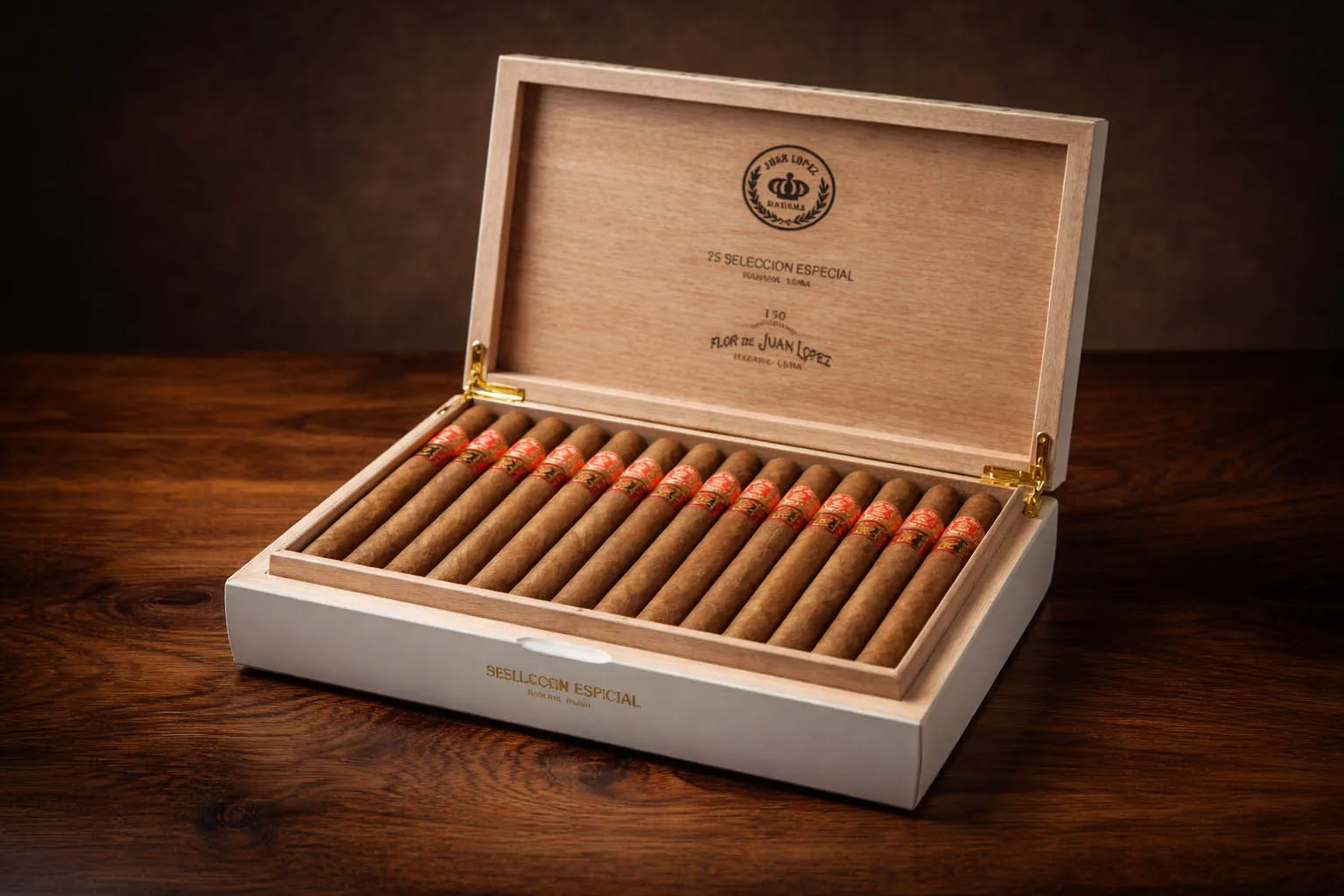
Juan López Selección Especial: Exclusive La Casa del Habano Vitola
Review of the Juan López Selección Especial LCDH: celebrating 150 years of Juan López and 30 years of the La Casa del Habano retai…
Read article →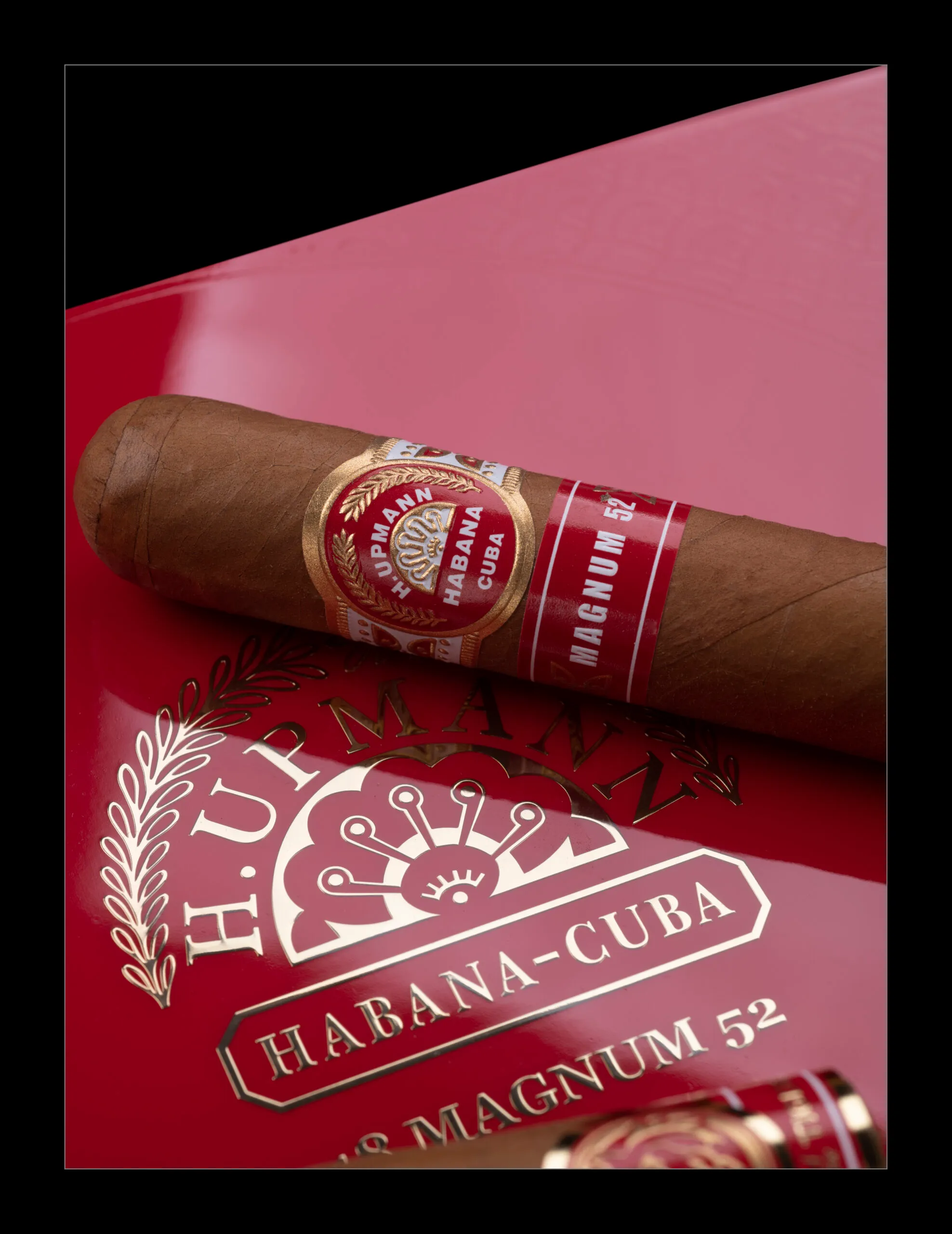
H. Upmann Magnum 52: Year of the Tiger Cuban Collector's Vitola
Complete guide to the H. Upmann Magnum 52: Habanos S.A.'s luxury release commemorating the Chinese Lunar Year of the Tiger.
Read article →
The Best Cuban Cigars Worth Seeking Out in 2026: The Aficionado's List
From Cohiba Siglo VI to Partagás Lusitanias and Trinidad Fundadores: explore the top Cuban cigars every connoisseur must smoke at …
Read article →
The History of Montecristo Cigars: From Alexandre Dumas to Havana Icon
Discover the legendary story of Montecristo cigars, founded in Havana in 1935 by Alonso Menéndez and inspired by The Count of Mont…
Read article →